

Heat is the single most destructive force inside an automatic transmission, and most drivers never give it a second thought until the damage is already done. By the time you notice slipping gears, delayed engagement, or a burnt fluid smell, the internal components have been cooking far longer than they should. A transmission oil cooler is what stands between normal operating temperatures and a burned-up box that needs a full rebuild.
At Wholesale Automatic Transmissions, we’ve been rebuilding automatics at our Bayswater workshop for over 30 years, and the pattern is consistent: vehicles that run without adequate cooling come in for expensive repairs far sooner than they should. Tow rigs, 4WDs, and trucks working in hot climates tell the same story inside the pan every time, scorched fluid, hardened seals, worn friction surfaces. Most of it is preventable. This article covers how a transmission cooler works, who genuinely needs one, how to choose the right unit, and what separates a quality build from a cheap bracket-and-core combo that won’t last the distance.
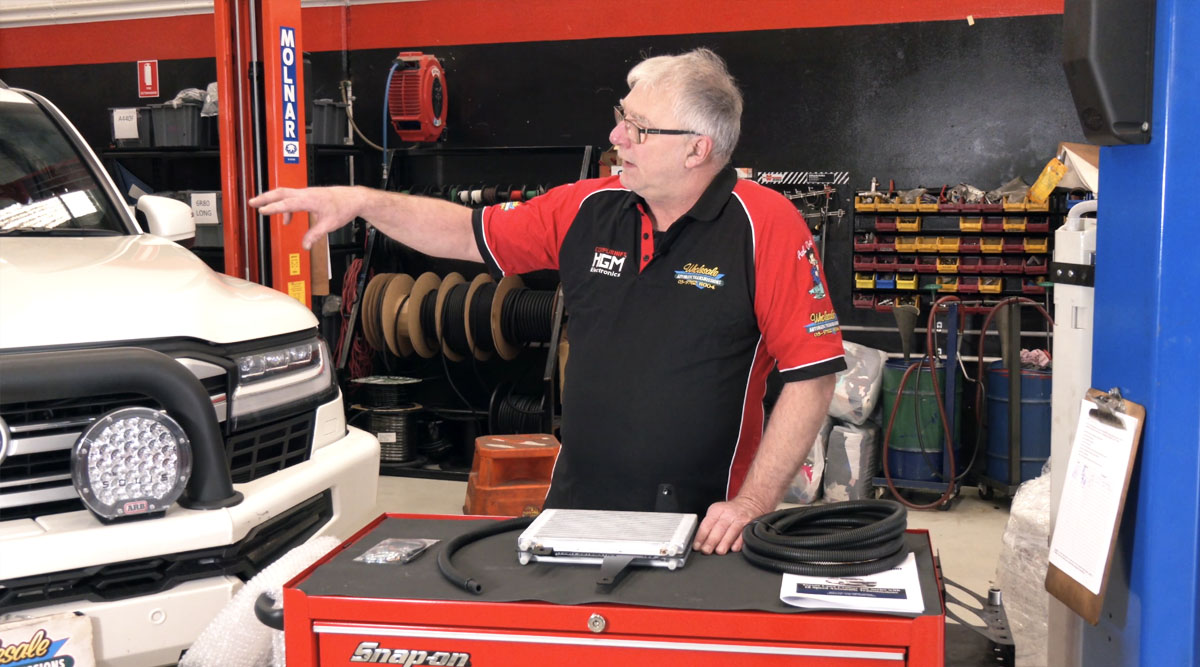 LandCruiser 300 Series Transmission Oil Cooler Installation
How a transmission oil cooler actually works
Most automatic transmissions run automatic transmission fluid (ATF) through a small oil-to-water heat exchanger built into the radiator. That factory radiator transmission cooler setup works fine under light, everyday driving conditions where heat loads are modest and temperatures stay manageable. Under towing or sustained high-load driving, that radiator circuit simply can’t shed heat fast enough. An auxiliary transmission cooler mounts in the airflow path at the front of the vehicle and drops fluid temps before the automatic transmission fluid cycles back into the transmission.
The heat transfer process works like this: hot automatic transmission fluid circulates from the transmission to the cooler, passes through the core where airflow draws heat away from the fluid, then returns cooler to the transmission. The efficiency of this process depends on three factors: how much surface area the core has, how fast air flows across it, and how firmly the bracket holds the cooler in position at the correct angle to that airflow. Get all three right and the cooler earns its keep on every trip. For common questions about fitment and performance, see the engine and transmission cooler FAQ.
One important point worth understanding: adding an auxiliary cooler doesn’t mean you bypass the factory unit. The recommended setup (unless there is reasons the factory unit must be disconnected for technical reasons) runs the aftermarket transmission cooler in series with the factory one, you keep the factory cooler’s stable thermal environment and add air-based cooling on top of it. That dual-cooler arrangement gives you the best of both systems.
Why heat destroys automatic transmissions faster than anything else
Normal automatic transmission fluid operating range sits between 60°C to 100°C (140°F and 212°F). Above roughly 100°C fluid starts to oxidize and varnish formation begins. At around 116°C (240°F), degradation accelerates and internal seals begin to harden. Push past 148°C (300°F) and you’re looking at rapid component failure, often within a few thousand miles of sustained exposure. According to transmission fluid chemistry data and workshop observation across thousands of rebuilds, every 11°C (20°F) drop in operating temperature can very effectively significantly increase the lifespan of transmission components, a relationship consistent with automatic transmission fluid additive degradation curves documented in industry technical literature. For a practical discussion of transmission temperature limits and recommendations, see this overview on how hot is too hot.
Oxidized ATF loses viscosity and can no longer generate the hydraulic pressure needed to actuate clutch packs and bands cleanly. The result is slipping, delayed engagement, and accelerated wear on friction surfaces. Overheating also degrades seals and O-rings, leading to internal and external leaks. By the time those symptoms show up at the shifter, the internal damage is often well advanced, and the repair bill reflects it.
Who actually needs an auxiliary transmission cooler
If you regularly tow a trailer, caravan, or boat, an auxiliary cooler isn’t optional, it’s protective maintenance. A documented real-world installation on a towing vehicle dropped fluid temps from 107°C (225°F) to 80°C (175°F), a 27°C reduction, simply by adding a properly mounted aftermarket cooler in the right position. That 27-degree gap is the difference between a transmission that lasts and one that arrives for a rebuild ahead of schedule.
4WD owners tackling steep tracks, rock crawling, or extended low-range terrain generate the same thermal demands as a tow vehicle. Sustained low-speed, high-load driving is one of the most heat-intensive scenarios an automatic can face, and most factory cooling setups aren’t engineered for it. Ranger, LandCruiser and Patrol owners running corrugated outback roads or towing heavy off sealed surfaces are exactly the customers who benefit most from an upgraded cooler setup.
Vehicles operated in hot climates or dense urban traffic also run warmer than most people expect. Extended idling generates sustained heat without the airflow that naturally cools the transmission at highway speeds. Add mountainous terrain with repeated climb-and-descent cycles, and the factory cooler is working overtime. Both scenarios push fluid temps higher than a built-in radiator circuit is designed to handle comfortably over the long run.
Transmission oil cooler core types: what the specs actually mean
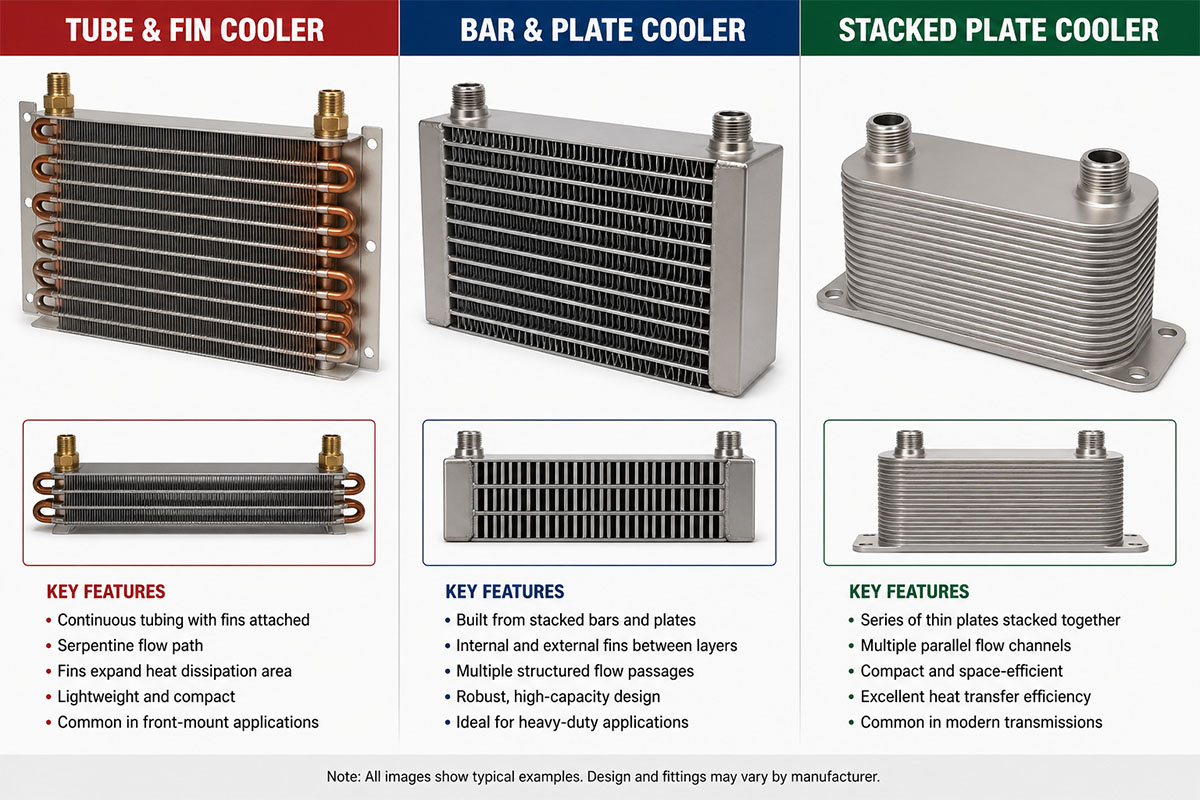
Check out the 3 different types of cooler core in the below infographic:
Specs only mean something if the housing holding that core can take a beating, which brings us to what separates a quality unit from the cheap alternatives.
What separates a quality transmission oil cooler from a cheap one
Core size should match the heat load your transmission generates, not just the available mounting space. A cooler that’s undersized for the application reduces temps slightly but won’t keep pace under sustained load. For larger tow vehicles and 4WDs in demanding use cases, you need higher thermal capacity and a design that maintains flow rate without creating excessive pressure drop. Starve the transmission of fluid and you’ve created a different problem than the one you were trying to solve. At this point most people turn to solutions that are engineered for their particular vehicle as all the calculations and road testing has been done correctly by a suitably qualified company.
The bracket is where many cheap coolers fall apart, literally. It holds the entire unit in position against constant engine bay vibration, road shock, and airflow pressure. A flimsy or multi-piece bracket flexes, fatigues, and eventually allows the cooler to shift position or crack fittings loose. That tends to happen at exactly the wrong moment and usually far from home.
Wholesale Automatic Transmissions’ Australian-designed transmission oil cooler is built around a single-piece 3mm steel bracket, a construction standard that eliminates the flex points common in lighter designs. That engineering decision comes directly from seeing what happens to poorly supported coolers after 50,000 km (or more!) of corrugated outback roads or loaded highway towing. When you’re comparing a tranny oil cooler from our range against cheaper alternatives, bracket integrity is the specification worth scrutinising first. Proper steel single piece brackets are sure to go the distance.
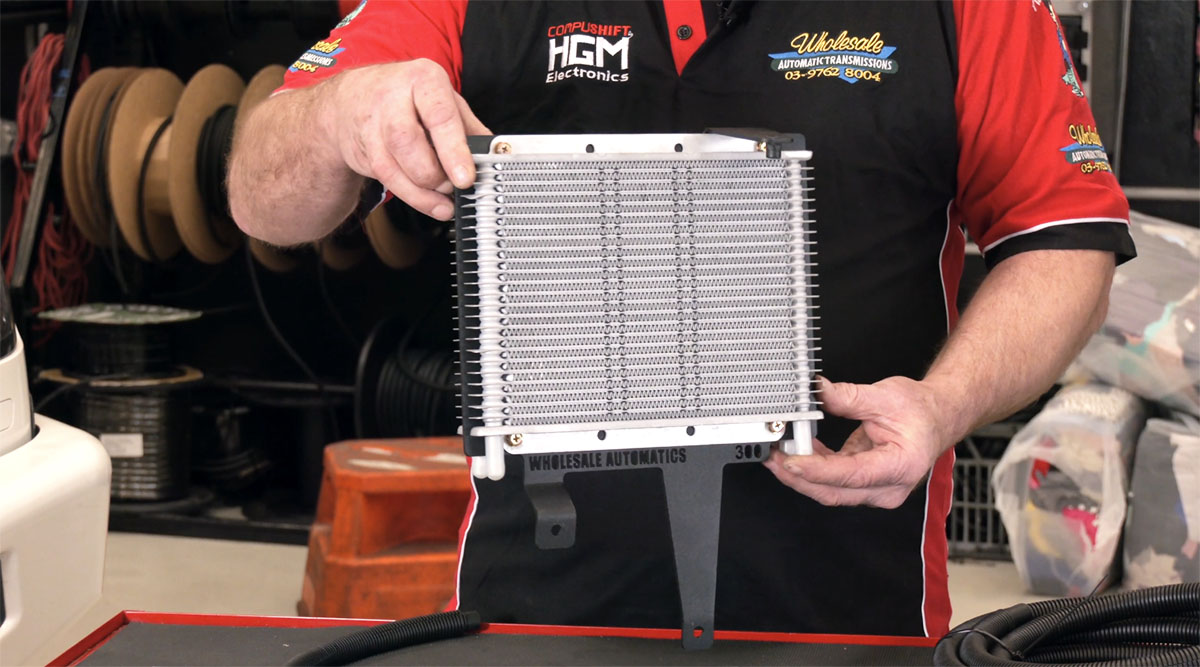 LandCruiser 300 Series – Vehicle Specific Bracket
Transmission oil cooler installation tips and the fitment mistakes that cost people
Mounting position is critical. The cooler needs to sit in front of the air conditioning condenser or radiator so it receives clean, unobstructed ambient airflow. Mount it behind another heat exchanger and it’s pulling in pre-warmed air, which cuts its effectiveness significantly. Secure mounting is non-negotiable: metal straps or bracket-mounted systems that hold the cooler firmly prevent vibration damage and keep the unit aligned in the airflow path across the life of the vehicle.
Most transmission cooler lines use -6AN (3/8″) or -8AN (1/2″) fittings. Matching your hose ID to the transmission’s port size prevents flow restriction that can starve the transmission at critical moments. Vehicle-specific transmission cooling kits remove the guesswork by providing pre-formed lines, correct fittings, and OEM-compatible connections, worth the investment if you want a clean, reliable install without fabrication work.
Universal kits offer more flexibility for custom builds but require careful attention to routing. Keep hoses away from exhaust components, avoid sharp bends that restrict flow, and use proper clamps at every connection point. A small leak in a transmission cooler line can empty your ATF fast with no warning until the transmission is already running dry.
The bottom line on transmission cooling
A transmission oil cooler is often one of the highest-value upgrades you can fit to any vehicle that works hard, whether it’s towing, hauling freight, running off-road, or operating in a hot climate day after day. Owners who’ve added a quality automatic transmission oil cooler to working rigs consistently report fewer heat-related issues and longer service intervals between fluid changes. The core principles are straightforward: ideally keep automatic transmission fluid under 90°C for best longevity, choose a core type matched to your use case, size the cooler to your actual heat load, and don’t compromise on bracket quality or installation. Cut corners on any one of those and you’ve undermined the whole system.
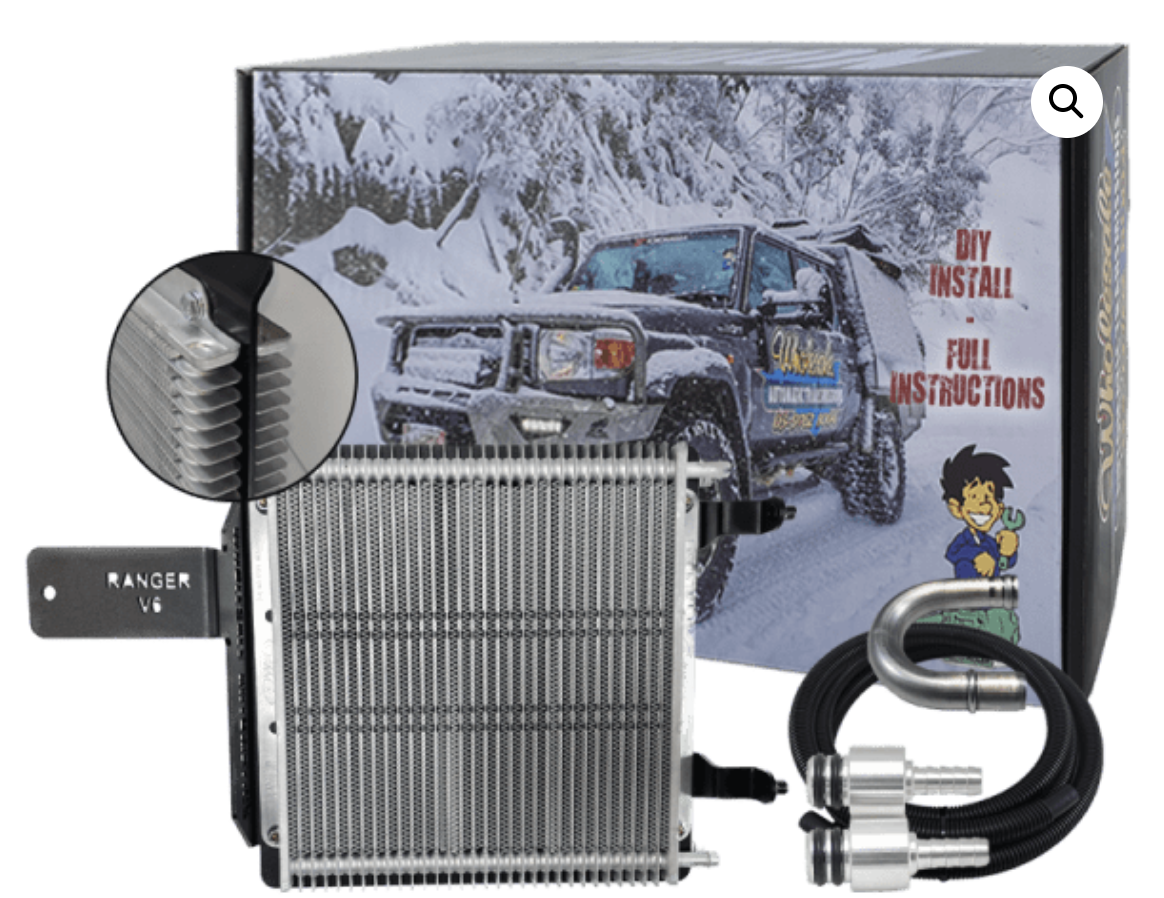 Transmission Oil Cooler Kit on a Single Piece Bracket
At Wholesale Automatic Transmissions, these aren’t just product specifications, they’re lessons learned from rebuilding transmissions that came in because the factory cooling wasn’t enough. If you’re unsure which cooler suits your vehicle and how you use it, talk to a specialist before the temperature gauge tells you the hard way. Our team at the Bayswater workshop has been solving transmission cooling problems for over 30 years, and we’re not short of informed opinions on what works and what doesn’t. Check out our range of transmission oil coolers for the right setup for your rig.